About Us
Making screens feel more physical.
HapticVision is focused on one accessibility challenge: helping blind and low vision users understand digital screen information through touch. The work brings together tactile hardware, real-time screen interpretation, and careful product design for websites, software interfaces, and 3D digital content.

Mission
Build a bridge between visual information and touch.
Many digital tools are built around visual layouts: maps, charts, dashboards, forms, controls, educational models, and moving interface states. Audio can describe some of this information, but it is not always enough for spatial understanding.
HapticVision is building a tactile display that makes screen information feel more tangible. The aim is practical and focused: give blind and low vision users another way to understand what is on screen, where it is, and how it changes over time.
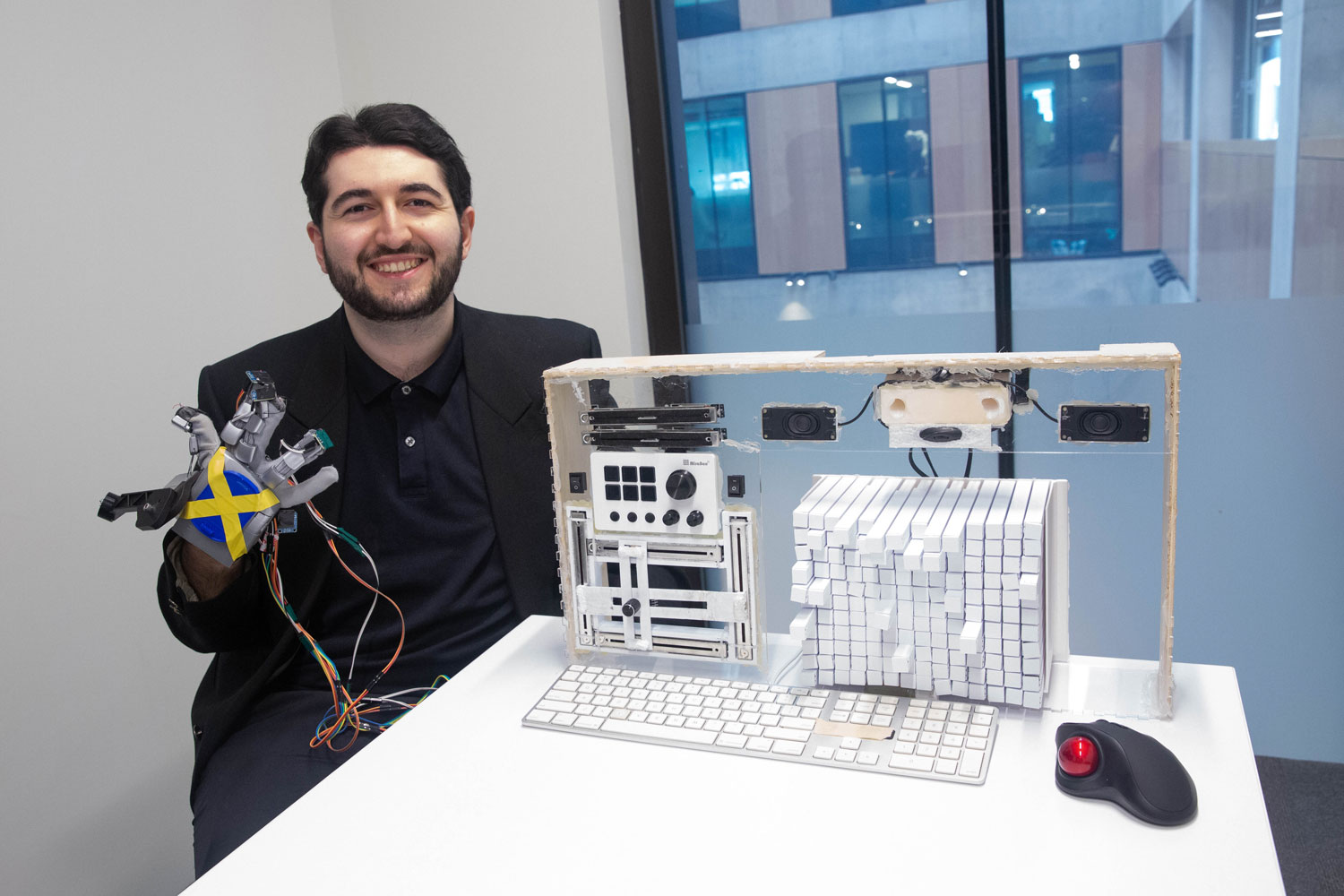
Haptic Vision in the news
University of Toronto Engineering recognition
The University of Toronto Department of Mechanical and Industrial Engineering profiled HapticVision CEO Alex Kurk after he received the 2026 Troost ILead Difference Maker Award. The article describes his work on tactile, 3D representations of software interfaces and notes that Haptic Vision is being developed as a startup to commercialize the technology.
The story also explains the product direction: converting 2D images, diagrams, and user interfaces, including websites, into physical forms users can interact with.
Read the articleApproach
Simple principles guide the product.
-
01
Interpret
Identify the parts of a screen that matter most for orientation, navigation, learning, and action.
-
02
Translate
Convert useful visual structure into tactile feedback that can be explored by hand in real time.
-
03
Refine
Keep the experience calm, learnable, and grounded in real blind and low vision use cases, including education and software navigation.